Yesteryear Review: Is Caro Claire Burke’s Tradwife Novel Worth Reading?
We may earn money or products from the companies mentioned in this review or post, but all opinions are our own.
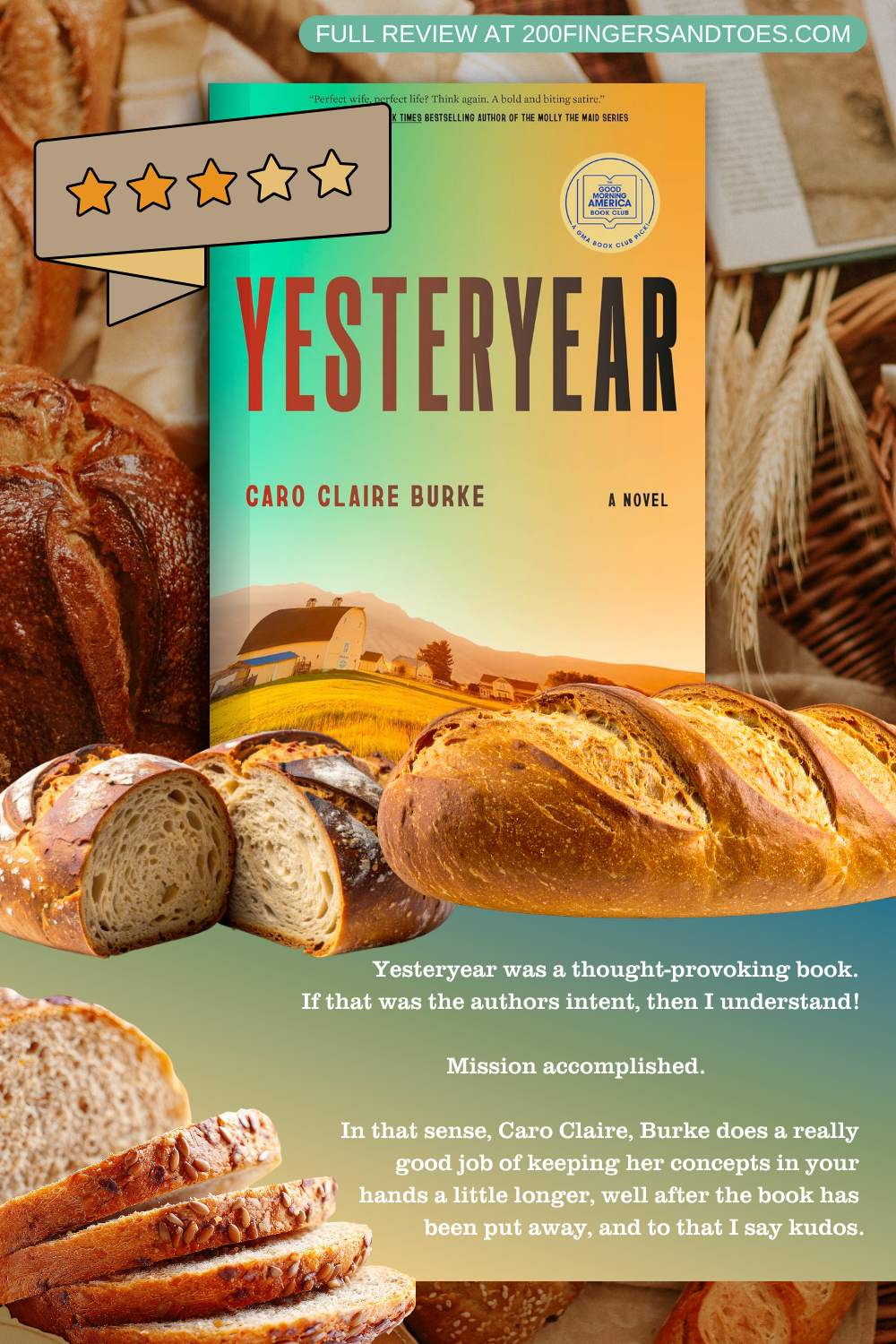
If you’re looking for an honest Yesteryear review, you’re probably wondering whether Caro Claire Burke’s much-discussed tradwife novel lives up to the hype. After finishing Yesteryear, I found myself thinking less about social media and more about identity, motherhood, and the difference between romanticizing your life and actually living it.
What do I say in a Yesteryear review?
It is Fatal Attraction, but the main character is in love with herself. If Glen Close played Natalie, the insta-famous tradwife, it would make a lot of sense. The scene would open with her boiling the fluffy Scottish Highland calf after neglecting its care. Then, she would claim to make ethically sourced leather from her secret, family-crafted recipe. Afterward, she’d sell it to you at a substantial markup with a BIG smile for the camera.
Yesteryear is not so starkly forward, but in ways still subtly unveils the darker side of playing a tradwife for a live audience. Is a life lived to be observed, actually lived at all?
Readers are asking, is Natalie all that bad?
Is she a trailblazing solo-preneur with a failing support system? Is her voyeuristic lifestyle driven by circumstance, pressure, or pride? Then there is the underlying question: is social media performative, perverse, or an adult-playground form of peer pressure? Will it be our fatal attraction as we become increasingly glued to our favorite insta-celebs?
I was curious after reading another Yesteryear review and seeing so many conflicting reactions.
The promoted story feels familiar. My history as a homeschool blogger and pseudo-homesteader made me curious about the book’s premise. After all, I once owned a chicken tractor. We once butchered two hundred chickens with an assembly line of children in our backyard.
I followed quite a few bloggers in this season of my life. As a new mom, small business owner, and someone thriving on a small pseudo-homestead, I found their stories a source of comfort and encouragement. These bloggers were part of why I started my own blog.
As a lonely stay-at-home mother with few peers, I hungrily read new posts and indulged in lovely images of happy kids and farm-life antics. I also worked on our old 1900s house. We homeschooled, fed the chickens, and faithfully partnered with my husband in our marriage and business ventures.
The difference – I was blessed to live in a time when the “other” world was still tethered to a plug in the office upstairs and not ever in my hand, calling for my attention. Blogging was a documentation of our days in the sunshine and mud, a way to share the projects with my sisters, not a million-viewer business.
What Is Yesteryear About?
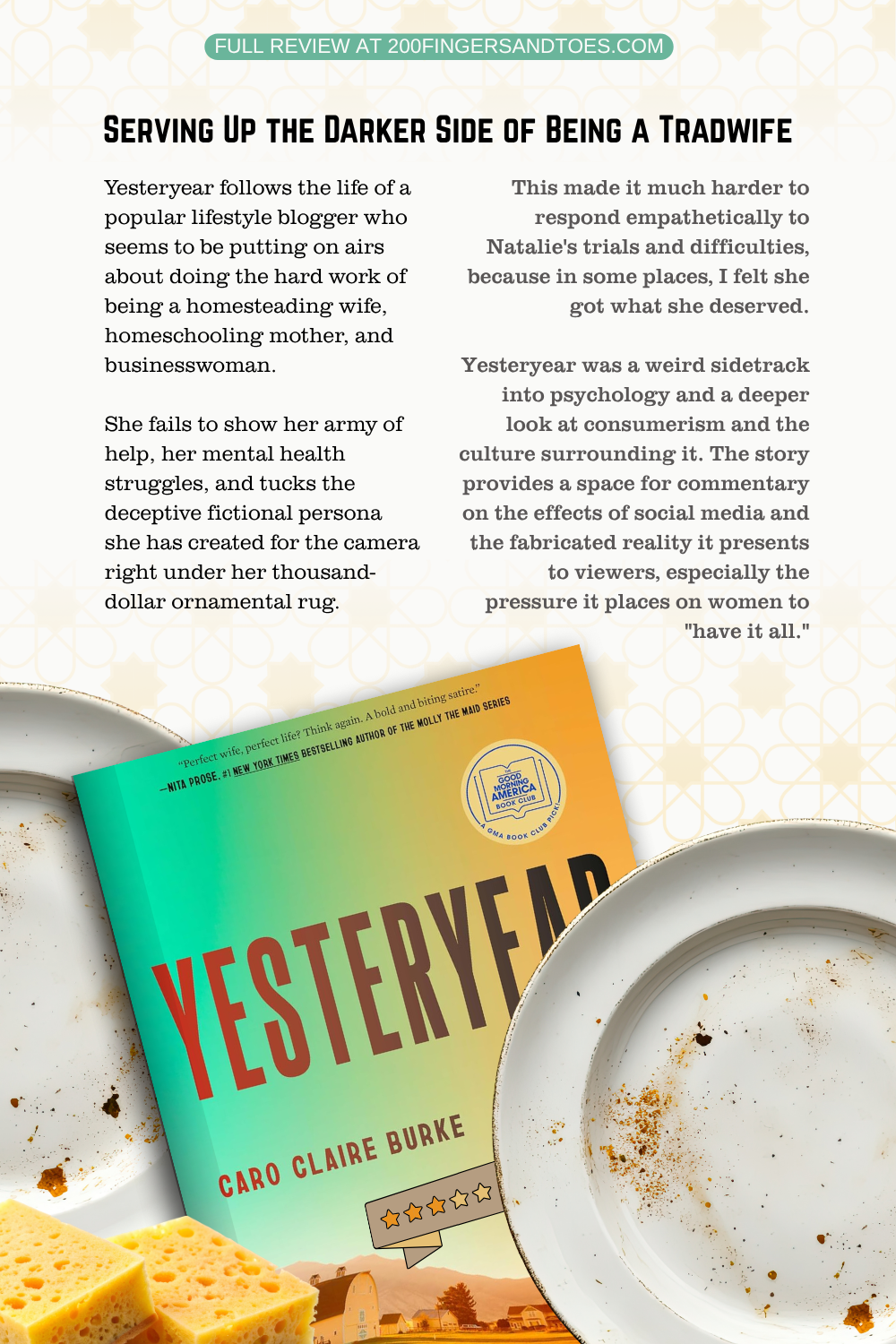
Yesteryear follows the life of a popular lifestyle blogger. We quickly discover she is clearly and intentionally putting on airs about doing the hard work of being a homesteading wife, homeschooling mother, and businesswoman. She fails to show her army of help. Ignores her mental health struggles, and tucks reality right under her purchased-for-her thousand-dollar ornamental rug. Leaving viewers with the deceptive fictional persona she has created for the camera.
While in Sweet Pea, food was used to comfort and build community, in Yesteryear, Natalie uses food to present an image that was never intended to nourish anyone. Her kids go hungry while she films and refilms the making of the perfect roast.
What Makes Yesteryear Different?
These are crazy people, playing house with old money, and should not be mistaken for traditional – anything!
The twist is revealed when Natalie finds herself on an actual 1800s farm, with all the trials, heartaches, and setbacks that come with it. The storyline was an interesting take with several unexpected twists and turns. It was NOT what I was expecting.
The main character, Natalie Mills, is a polarizing human. She descends with an ever-spiraling narcissistic mindset, conniving from the very beginning of her story. At each turn, she wove her worsening circumstances into a fabricated life, one she convinced herself was truer with each day she wore it for her audience.
What I didn’t Like About Yesteryear
Natalie’s character felt like a caricature of all the worst aspects of influencer culture. I understand the author interviewed women from the Mormon lifestyle, Fundamental Christians, and traditional wives for insights. Yet, for all the research, Natalie felt like a cardboard cutout of an SNL skit mocking Mormon tradwives rather than a genuine self-promoter in too deep.
We don’t get to see the foundation that built her psyche. But we are front row for the breakdown.
I don’t mind reading a book with characters I don’t like. I loved The Poppy Wars, and the main character, Lin, behaves in anti-heroic ways. I don’t need to love you to love a book, but I would have liked to know where this self-aggrandizing voice entered Natalie’s mind.
Major Themes in Yesteryear
Unveiling the Darker Side of Being a Tradwife
Don’t mistake, this author was being intentional with her hyperbolical characterization.
Natalie’s character is grating and self-serving. This made it much harder to respond empathetically to Natalie’s trials and difficulties, because in some places, I felt she got what she deserved. Perhaps it takes a certain level of ego to raise a platform of millions of viewers. But Natalie’s open insincerity is available to us through the gift of the author’s internal dialogue.
If our inner voice were broadcast, would we be this debased?
Is our criticism fueled by her willingness to pander to the visual escape we desire? Is the reader a participant in the madness when we suspend our reality as well?
Also, this husband! Ugh. Don’t even get me started on the magnitude of his character flaws. Enraging.
My Final Thoughts on Yesteryear
Yesteryear was a weird sidetrack into psychology and a deeper look at consumerism and the culture surrounding it. The story provides a space for commentary on the effects of social media and the fabricated reality it presents to viewers, especially the pressure it places on women to “have it all.”
It felt like a neon CTA for public figures to be more circumspect in their narratives and hold the face they present to the public more honestly. This narrative exposes the unspoken dangers of crafted lives, creating expectations without acknowledging the hardships and trials that accompany these shiny, happy, polished lives.
Discomfort? Reflection? Mission accomplished.
With all that being said, Yesteryear was a thought-provoking book, and if that was the writer’s intent, then I understand!
In that sense, Caro Claire Burke does a really good job of keeping her concepts in your hands a little longer, well after the book has been put away, and to that I say kudos.
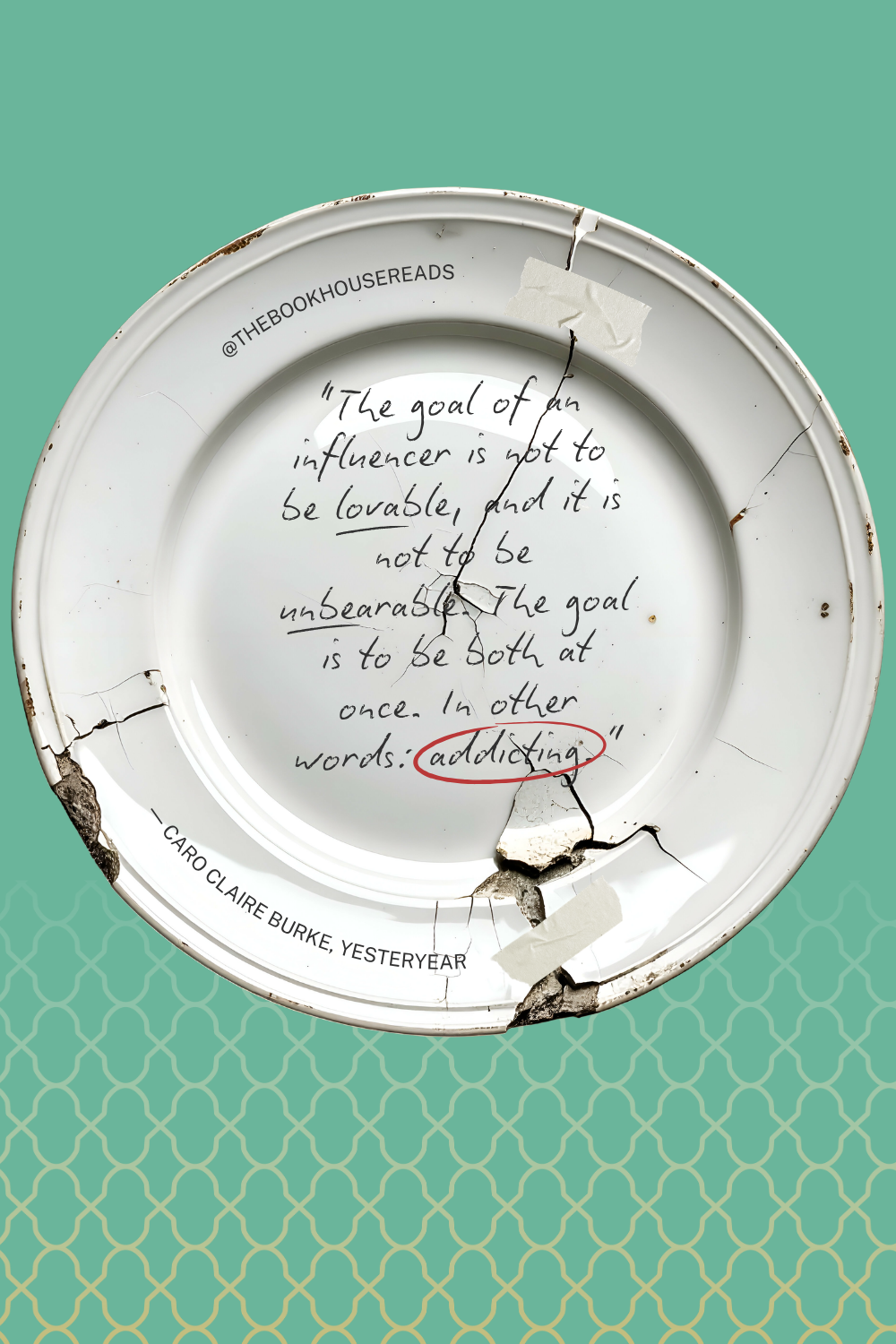
Haven’t read it yet? Grab a copy and tell me what you thought. You can leave me a DM @thebookhousereads on Instagram. This is where I share my personal reading for the year. I’m on book 57 for 2026 so far.
If You Enjoyed This Review
If Yesteryear captured your attention because of its themes of identity, family expectations, and the stories we tell ourselves, you might also enjoy reading the reviews for:
Are you a reader like me?
I’d love to connect. I love to share real books I’ve actually read and sometimes leave a video commentary on Instagram. I then agonize over it because I usually don’t get ready or do my hair for a quick video. In other words, like 200 fingers and toes, it is just me – being me!