The Gardening Revolution is Now: Tiny Gardens Everywhere Reviewed
We may earn money or products from the companies mentioned in this review or post, but all opinions are our own.
I received an ARC audiobook copy of Tiny Gardens Everywhere: The Past, Present, and Future of the Self-Provisioning City by Kate Brown. The book description reads: From the eighteenth century to the twenty–first, the surprising history and inspiring contemporary panorama of urban gardening: nurturing health, hope, and community.
This manifesto for the next food revolution by acclaimed environmental historian Kate Brown speaks to nature lovers, food activists, social–justice warriors, urban planners, WOOFers, and the climate–concerned.
Ever since wage labor in cities replaced self–provisioning in the countryside, gardeners have reclaimed lost commons on urban lots. They composted garbage into topsoil, creating the most productive agriculture in recorded human history, without use of fossil fuels. The ecological diversity they fostered made room for human difference and built prosperity, too: in Nazi Berlin, working–class gardeners harbored dissidents and Jews; in Washington, DC, Black southern migrants built communities around gardens and orchards, the produce funding homeownership.
Grafting contemporary experience and concerns onto every historical chapter, Brown creates a mesmerizing hybrid past and present, archive and experience, showing how down–to–earth gardeners can reap abundant harvests while fostering mutual aid and political engagement.
A Quick Historical Primer of Growing
Tiny Gardens Everywhere covers the historic era when open grazing was popular. Families grazed their animals on shared tracts of land year-round. Commoners gathered the food they wanted from nearby woods and communal forests.
Tiny Gardens explores the lasting change that happened when communal land was closed. Families and small farmers could no longer depend on it. The book traces the ripple across history and into today’s farming and land management practices.
Whole communities transitioned from trade and barter to labor and farming. The loss of leisure and self-reliance was sweeping, and people have been looking for a way back ever since.
Growing Food is Not a Luxury
Tiny Gardens Everywhere provides a deep dive into the culture of growing our own food. Both historically and from the perspective of those who sought to control access to and the ability to grow it.
My main takeaway is that growing your own food is an act of rebellion!
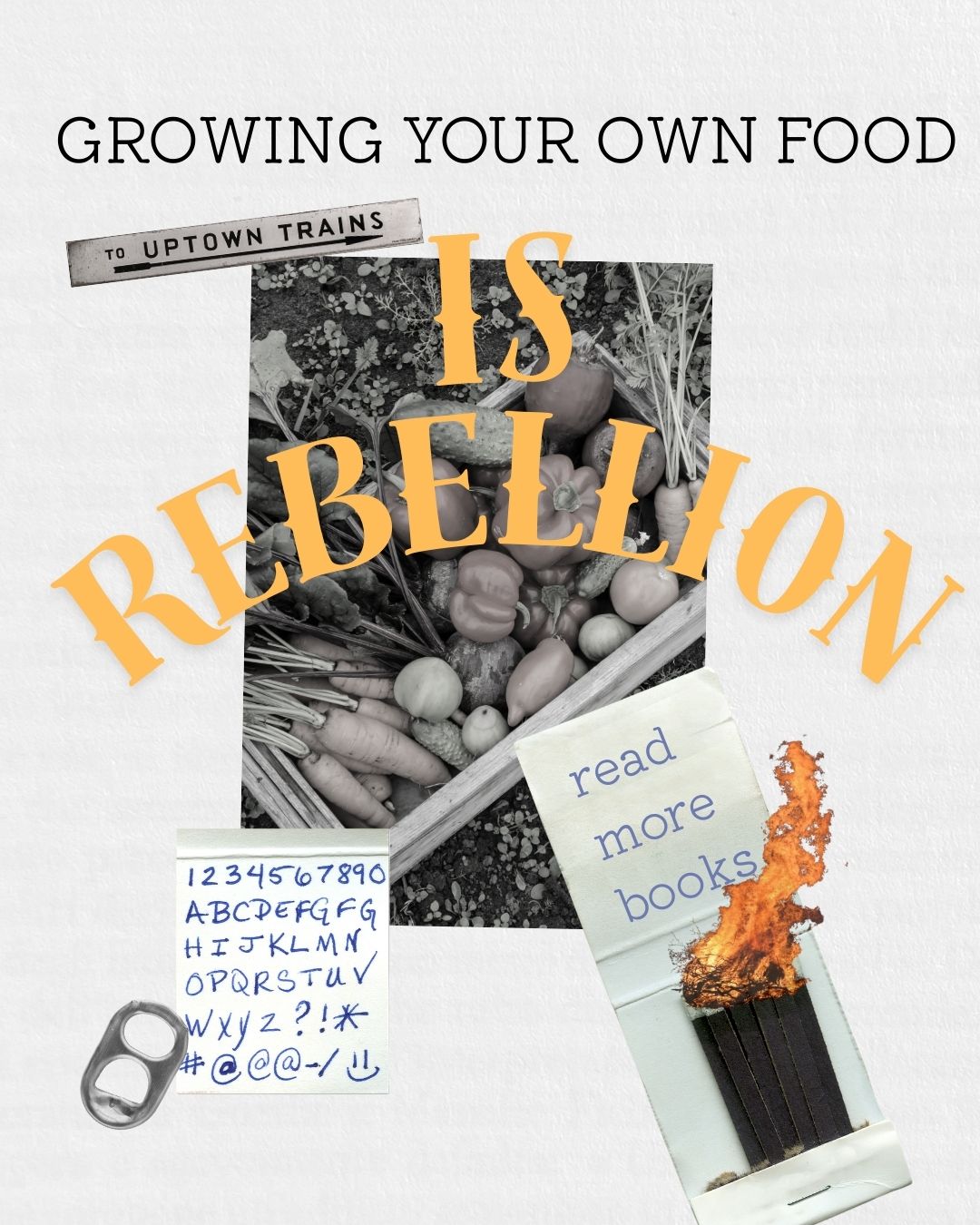
It has been controlled in every culture by ordinances, regulations, and condemnations.
I deeply enjoy the stories of communal growers in countries outside the United States and of cooperative gardening in the United States. These practices are making room for cultural connections.
More people are finding creative ways to grow the foods they desire without chemical and economic overreach. Tiny Gardens Everywhere is a great gift for a passionate community grower or small-scale grower.
The effect of this book is twofold: I want to join my community garden and get seeds in the ground immediately.