9 Quick Ways to Get Your Kid to Want to Read This Summer
We may earn money or products from the companies mentioned in this review or post, but all opinions are our own.
Reading is the number one way to help your kids retain what they learned over the school year. But, how do you get your kid to want to read? We have raised a house full of readers, and it was not an accident. We applied these purposeful strategies and created an environment that helped us reach our goal of raising kids who want to read for themselves. There are nine ways you can help get your kids reading, too.
Summer is a long break if you stop to consider it.
What if you took three months off from work every year?
Not only would you not want to go back, but you might never catch up on everything that had happened while you were out.
Summer is a perfect opportunity to hone skills, work to catch up, or take advantage of the spare time to take creative courses your kids might not have time for.
Your child’s brain is in work mode all school year. Summer is no time to let their learning mode go dormant. Reading is how we keep our kids learning over the summer months and avoid summer slide.
What is Summer Slide?
Testing shows that kids lose up to 30% of their learning over the summer months. Textbooks are filled with review material each year to help get everyone caught up. Kids without access to reading books lose up to 10% of their learning over the summer.
Keys to Get Your Kid Reading This Summer
We have all made our kids read for 30 minutes before they get to watch TV or play video games. Obligatory reading to gain privileges is a starting point, but how can we get closer to the goal of raising readers?
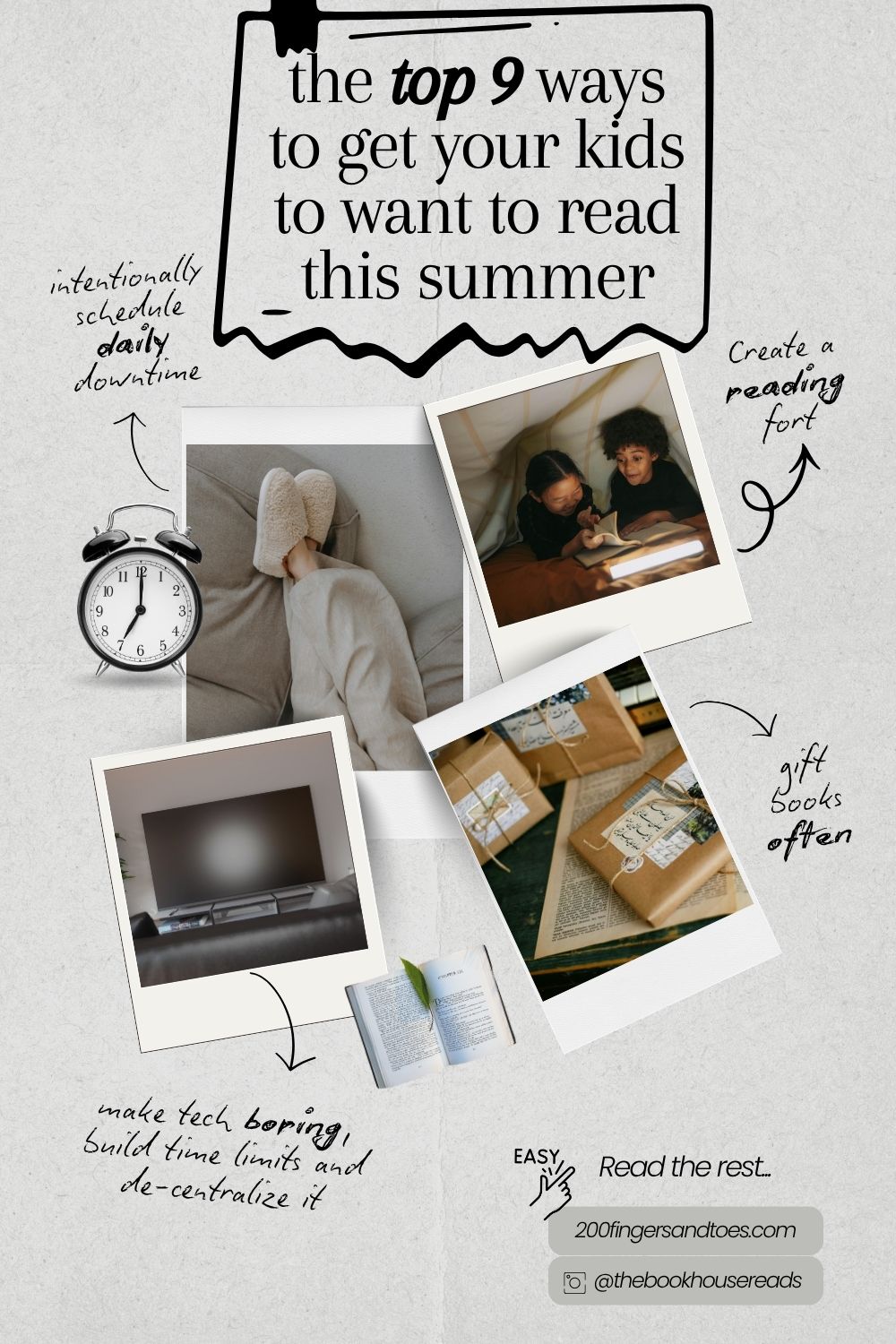
Here are a few ways we helped our kids make reading a daily habit in summer.
1. Make Tech Boring
We didn’t have streaming at home until the kids were all older. We rotated through a stack of DVD’s. Our shows were low action, educational, or well-loved. The weekly flurry of new shows on Netflix, Hulu, and Peacock was not a factor.
Without an influx of new input, movies became a place to settle in rather than being charged up. Movie nights were saved for family time. In this way, we created times to look forward to as a family.
2. Parental Control for as Long as Possible
Watching a DVD was something we allowed in the afternoon each day before quiet time or when I was prepping dinner. When the kids were younger, using a DVD was a great choice because it had a clear, final ending. Of course, the kids have watched all the behind-the-scenes features and played every interactive game offered, but at some point, these lost their appeal, and the TV got shut off.
When we did get streaming in our house, I quickly discovered that these services are designed to keep you watching. With streaming networks, each show leaps into the next without a pause or break. YouTube scrolls for an eternity. I wish I could install a quarter slot on our TV so it would shut down on its own.
Adding these services required a ton of policing and was way less fun for me. Fortunately, we already had well-established boundaries for TV time. We used an internet filter (at the time, Circle) with a timer that would shut off the internet. The filter made the rules easy to keep.
The point is, keep control of the remote for as long as possible. This gives you kids time to build reading habits and gain an appreciation for boredom, creativity, and quiet.
3. De-Centralize Entertainment
Placement of your TV is powerful. Back in the formative years, we had ONE small, sad TV. It was placed in the smaller sitting room. A room we didn’t use much. I didn’t want the TV to be central in our spaces.
Placement is meaningful. When we finished the basement, we set up a large TV and a huge couch for family movie nights. We made room for the Wii for game nights. The focus was clear; this was a family space. TV was for connecting.
Of course, the kids became teens. Some of the older teens got jobs and purchased TV’s for their rooms for gaming, but this was long after healthy habits were established. Going backward is harder, so take advantage of the lessons we learned while you kids are still younger.
4. Creating Plush, Appealing Reading Environments
Make the reading spaces in your house the most appealing spaces to sit and enjoy. Add pillows, snuggly blankets, and great lighting. Give shelving a priority and add the kids’ favorites for easy admiring.
Pile in together to read often. Reading together creates a warm association for your kids. Make reading their favorite activity while they are small.
Give the kids great reading nooks in their rooms, and prioritize creating reading spaces in outdoor areas like the backyard or front porch.
5. Establishing a Quiet Time as a Routine
If there is one thing I learned from YMCA camp as a kid, it is to value FOB time. Flat On Back time is a habit the whole world could benefit from. Every camper was required to hit their cots midday and rest. Most of us napped, some read, and the counselors scheduled clandestine meetings in the woods. It was good for all of us.
As a homeschool mom, my number one priority was getting all the kids down for a nap at the same time. As the kids got old enough to skip sleeping, this became their FOB time. Everyone on their own mattress, silence in the house for an hour. It was bliss and a habit we maintained throughout their homeschool lives.
We need to learn to appreciate silence, cultivate quiet, and surrender to rest. These must be practiced.
The only activity allowed during FOB time is reading.
We had different hours as a homeschool family full of restaurant kids. We stayed up late to see Dad and slept in so Mom could work on the computer before the school day started. This meant that sleeping time was later – bedtime was not. Everyone still had to go to bed at 8 or 9, but I didn’t care what you did as long as I didn’t hear you.
The kids thought they were SO sneaky to read late into the night, but I knew what I was doing. I was winning at the reading game. (let them think they are being sneaky, but keep them well supplied in books they love, too!)
6. Getting the Older Kids Reading
Connecting with a topic that they are interested in right now. Look for unconventional reading books. Cookbooks, instruction manuals, How-To guides, and nonfiction books are great sources for kids to explore on their own.
7. Strewing a pile of books on a specific topic.
When the kids were younger, I would go to the library and pick up a pile of books on a topic we were interested in. This is great for subjects we didn’t have time to dig into during the school year.
One season, it was ships. I bought a ship puzzle and a pirate coloring book. We had a book basket filled with books related to the topic and let the kids browse them over the few weeks. Sometimes, it would be a pile of books about famous artists or sports biographies.
We matched the books to the kids’ interests and activities to reach them at peak interest to encourage reading.
8. Make Books a Favorite Gift and Reward
Make giving books a regular habit. Every November, each of our older kids looked forward to the new release from their favorite authors. The holidays are a prime time for publishers to get out new books, and we would anticipate what the new release would be. We would usually have a book that we planned to read aloud as a family.
I loved building a small library for each of my kids. They have loved taking their books to their adult homes and adding to their collections.
Classics are a great gift to add to Christmas traditions, or a favorite author in hardcover for a birthday. Even when our budgets were tight, I would hit the half-price bookstore for off-season bargains so books could be part of our gifting traditions.
9. Pay for Reading by the book
Look, the truth is, your kids are going to spend the whole summer asking you for money. Whether for activities or for food, their hands will be out all summer long. Fund their activities and cravings by paying them to read and report to you. Biographies, leadership, and self-help books are great choices for older teens.
They are going to think they are winning by getting paid to read, but you got them to read all summer and hand over their OWN cash, so who is so smart?

Model the Reading Habit
These habits are instrumental in building a block for raising readers. The truth is, readers raise readers.
Make sure your kids catch you reading. Make time for reading in your life. Read to the kids at bedtime, nap time, on vacation, and when they ask you to. The only way your kids will make reading a priority in their lives is if they see it as a value to you first.
Make the library your best friend.
We celebrated each child’s learning to read as though it were their birthday. We headed to the library and got them their own library card. They had a book basket in their room for their own books. We celebrated reading for the amazing gift it is.
As parents, we understand that the number of books a child reads is linked to future success in their education. Reading is an investment that costs us so little and offers such a vast and bountiful return.
I hope these tips help you on the way to raising your own readers.
Looking for reading suggestions for the whole family?