35 Sci-Fi That Spark Imagination and Build Brave Hearts
We may earn money or products from the companies mentioned in this review or post, but all opinions are our own.
Sci-fi books explore the vast array of human experiences, challenges, and capacities. That is why sci-fi for teen readers is a place for authors to explore the future, technology, and human civilization. Sci-fi for young readers offers a way to experience these challenges alongside characters they will remember fondly for the rest of their lives.
Because you don’t just want space or technology.
You want stories that feel:
- adventurous
- meaningful
- and just a little bit magical
The truth is, some of the best sci-fi books for young readers aren’t about science at all—they’re about growing up, asking questions, and figuring out who you are. That’s exactly why many classic titles for YA audiences focus on character, identity, and big life questions alongside imaginative worlds.
And honestly? Those are the stories that stick.
“If you want a child to fall in love with reading, give them a story that makes them feel brave.”
Where to Start with Sci-Fi for Young Readers
The best sci-fi for young readers and teens doesn’t overwhelm with technical jargon – they invite readers in.
It pulls them into a story first… and lets the science come second.
Here are some of the strongest starting points—books that balance imagination with heart.
How to Choose the Right Sci-Fi Books
When choosing a sci-fi book for your child, it’s easy to look at the recommended age range and stop there. But age is only one small piece of the puzzle. Two kids the same age can have completely different reading experiences—one may breeze through a fast-paced story, while another prefers something quieter and more reflective. Instead of focusing on age alone, it helps to look at how your child actually engages with books.
Reading level is a great place to start.
The goal isn’t to challenge them so much that they feel frustrated, but to give them a story they can move through with confidence. When a child can follow the story comfortably, they’re more likely to stay engaged and enjoy the experience. If they’re stopping every few lines to figure out what’s happening, it can quickly turn reading into a chore instead of something they look forward to.
It also helps to pay attention to your child’s interests.
Some kids love action and adventure, while others are drawn to mystery, relationships, or emotional stories. Sci-fi is a wide genre, which is a gift—it means there’s something for every kind of reader. A child who isn’t interested in spaceships might still love a story about friendship, identity, or survival… even if it happens to take place in a futuristic world.
And then there’s pacing, which can make a bigger difference than most people expect.
Fast-paced books, especially ones with short chapters and lots of momentum, are often perfect for reluctant readers. They create that “just one more chapter” feeling that keeps kids turning pages. On the other hand, some readers enjoy a slower build where they can settle into the world and characters over time.
When you take all three of these together—reading level, interest, and pacing—you start to see a clearer picture of what will actually work for your child. And when the book feels like a good fit?
That’s when reading starts to click.
The Best Sci-Fi Books for Kids and Teens (Beginner-Friendly List)
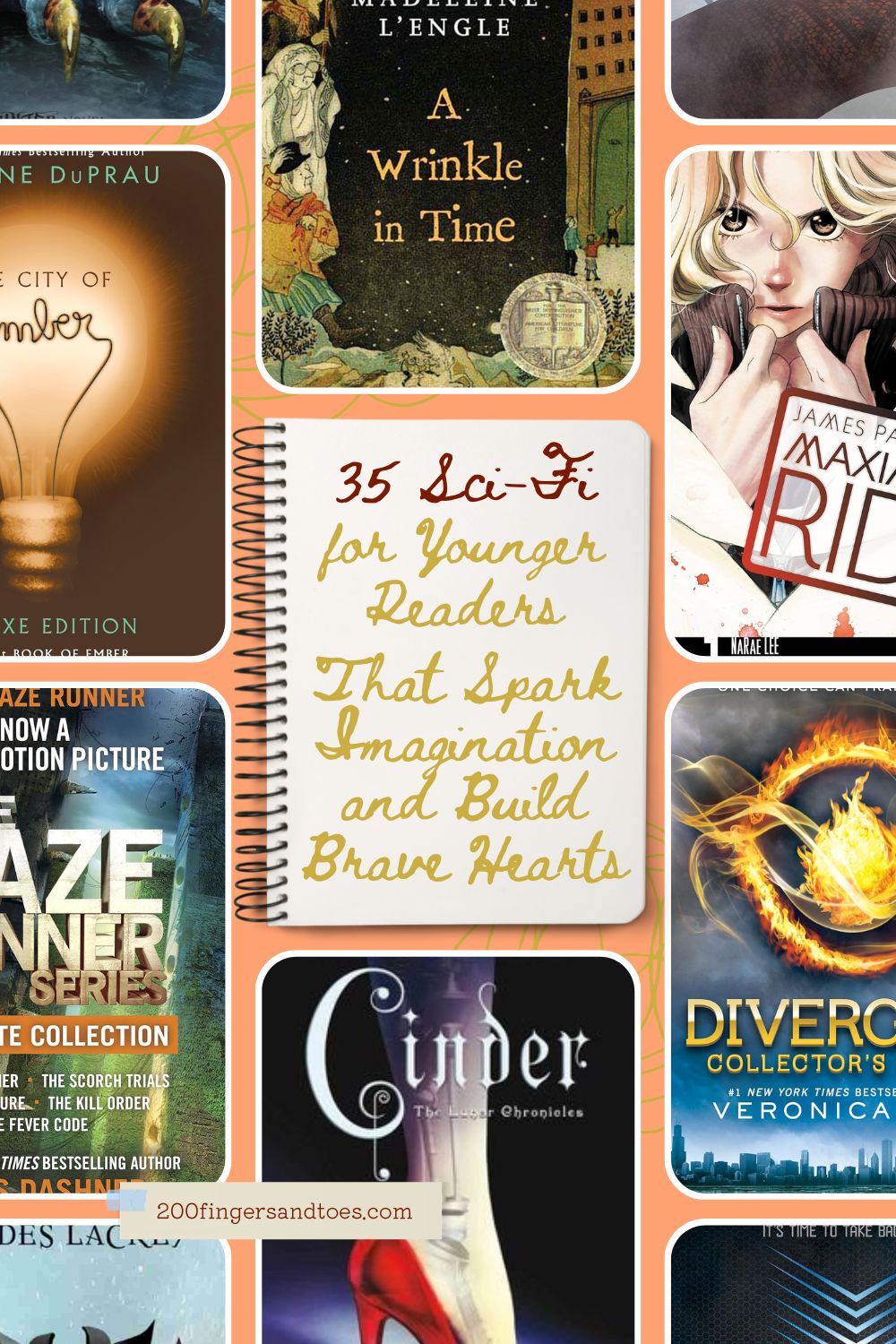
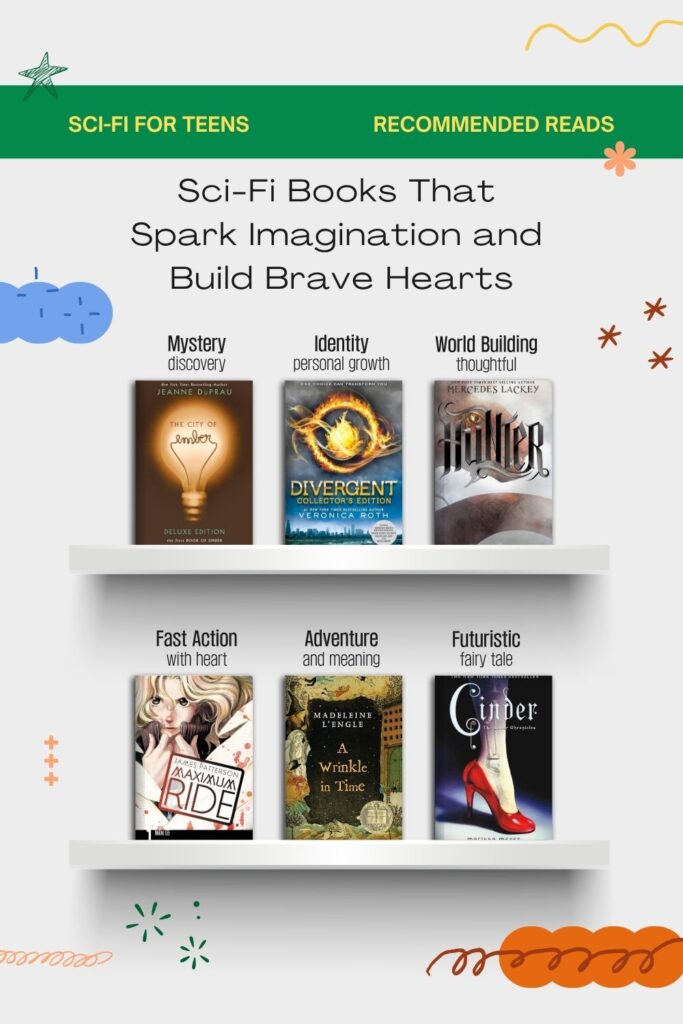
A Wrinkle in Time
This is where wonder begins.
It’s imaginative, a little strange, and full of heart. At its core, it’s about courage—about stepping forward even when you don’t feel ready. I love giving young readers the option of a series. As a reader, I love getting to know characters and am not ready to let them go after just one book.
👉 Perfect for readers who love adventure + meaning
Ender’s Game
This one pulls younger readers in quickly—and then makes them think.
It’s about pressure, leadership, and what it means to carry responsibility at a young age. It’s gripping, but also deeply reflective. This book was the first book to surprise me with the ending. I was not expecting it, and it was so good. This book will have your young reader cheering.
👉 Perfect for readers who like strategy + high-stakes decisions
The City of Ember
This story starts small… and grows.
It’s about curiosity. About asking questions when something doesn’t feel right. And about having the courage to search for truth—even when it’s uncomfortable. I love the innovative problem-solving and leadership attitudes in this series.
👉 Perfect for readers who love mystery + discovery
Maximum Ride: The Angel Experiment
This one pulls you in fast—and doesn’t slow down.
It’s high-energy, a little chaotic, and full of that “we have to figure this out right now” feeling. But underneath all the action, it’s really about found family, loyalty, and what it means to protect the people you love when everything is stacked against you.
This series is a perfect first romance for younger teens. I preread this for my advanced reader when she moved into the YA section of the library. Light Love interest, intense action – government agents hunting down genetically modified kids.
👉 Start here if you want fast-paced + action with heart
Cinder
This one feels familiar… and completely new at the same time.
It takes a classic story and gives it a futuristic twist, blending technology, identity, and belonging in a way that’s easy to fall into. Beneath the sci-fi elements, it’s really about figuring out where you fit—and what you’re capable of.
👉 Start here if you want fairytale + futuristic + strong character growth
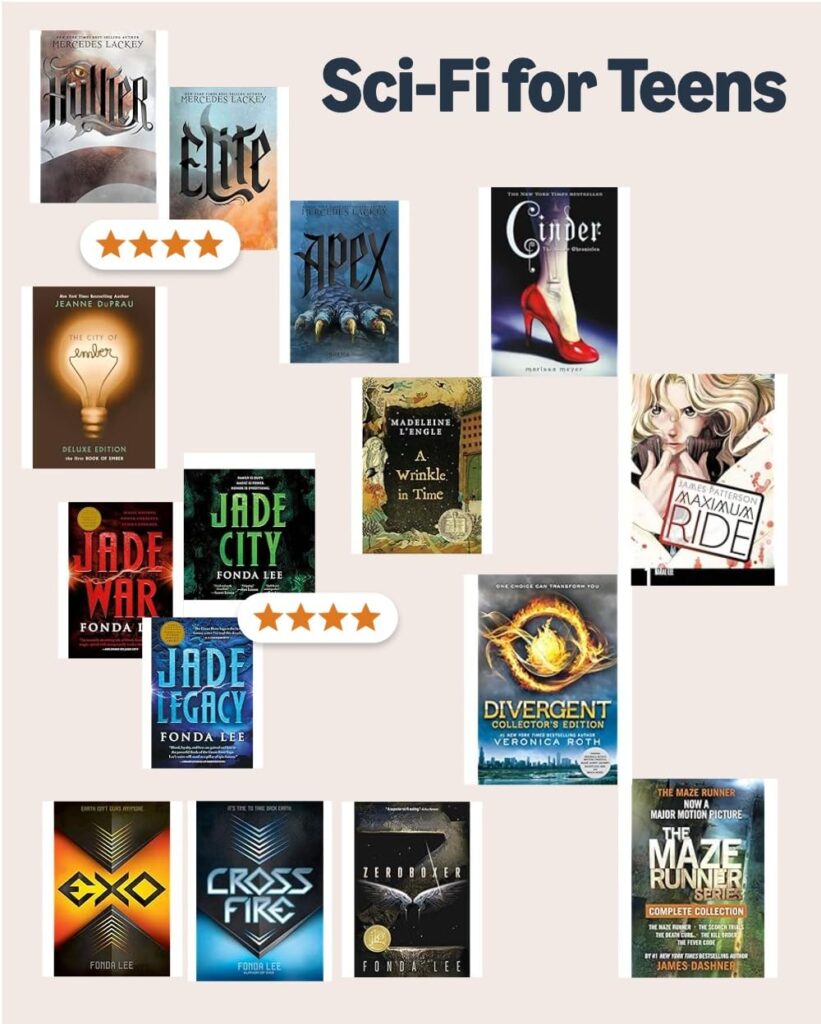
The Maze Runner
This one starts with confusion—and pulls you forward from there.
You’re figuring things out right alongside the main character, which makes it impossible not to keep reading. It’s fast, tense, and full of that constant question: what’s really going on here?
👉 Start here if you want mystery + nonstop momentum
Hunter Series
This series has a quieter strength.
It blends sci-fi and fantasy in a way that feels grounded, focusing on responsibility, connection, and stepping into a role you didn’t necessarily choose. There’s a strong sense of purpose running through it that builds over time.
👉 Start here if you want thoughtful world-building + character growth
Divergent
This one pulls you in with a simple question: Where do you belong?
Set in a world divided by identity and expectation, it follows a main character who doesn’t quite fit—and has to decide whether to hide that… or step into it. It’s fast-paced and gripping, but underneath it all, it’s about courage, choice, and learning to trust who you are.
👉 Start here if you want identity + high-stakes decisions + strong character growth
For even more books, check out the full list HERE
Why Sci-Fi for Young Readers Matters
Sci-fi gives kids something unique.
It lets them:
- imagine different worlds
- question what’s possible
- and see themselves as part of something bigger
Studies and reading lists consistently highlight how science fiction can spark curiosity and interest in science, technology, and big-picture thinking in young readers. We have used science fiction in our homeschool to explore new worlds and the world inside us for the last twenty-five years.
It is more than action and battles. Sci-fi offers a broader vocabulary, access to technology, and earlier exposure to scientific theory.
But more than that?
It gives them stories where:
- being different is an opportunity
- asking questions is encouraged
- and growth comes through challenge
The Real Goal Isn’t Sci-Fi
If you read these books, you will find a common thread. Great sci-fi stories are about connection.
You’re not trying to turn a child into a “sci-fi reader.”
You’re helping them find:
- a story that excites them
- a character they relate to
- a world that makes them curious
Because once that happens?
They’ll keep reading.
Final Thought
If you’re introducing sci-fi to a young reader, start simple.
Start with heart.
Start with a story that feels real—even if it’s set somewhere completely different.
Because the best sci-fi for young readers doesn’t feel like science fiction.
It feels like a possibility.
It feels like a world apart from the one they know, with heroes that look like them.
What are the best sci-fi books for young readers?
The best sci-fi books for young readers are engaging, easy-to-follow stories that focus on adventure, character growth, and imagination. Popular options include A Wrinkle in Time, The Maze Runner, and Cinder.
FAQ: Sci-Fi Books for Young Readers
What are the best sci-fi books for young readers?
The best sci-fi books for young readers are engaging, easy-to-follow stories that focus on adventure, character growth, and imagination. Popular options include A Wrinkle in Time, The Maze Runner, and Cinder.
What age is appropriate for sci-fi books?
Sci-fi books are available for all age groups, from middle-grade readers (ages 8–12) to young adults (ages 13+). Choosing the right book depends on reading level, maturity, and interest in themes like adventure, identity, or dystopian settings.
Are sci-fi books good for reluctant readers?
Yes, many sci-fi books for young readers are fast-paced and plot-driven, making them ideal for reluctant readers. Books like Maximum Ride: The Angel Experiment and The Maze Runner are especially engaging.
What are some easy sci-fi books for beginners?
Beginner sci-fi books for kids and teens include The City of Ember, A Wrinkle in Time, and Ready Player One. These books are accessible and focus on story over complex science.
What sci-fi books help build imagination in kids?
Sci-fi books encourage creativity by exploring new worlds and possibilities. Titles like A Wrinkle in Time and The Midnight Library help young readers think beyond their everyday experiences.
What are good dystopian sci-fi books for teens?
Popular dystopian sci-fi books for young readers include Divergent, The Maze Runner, and Red Rising. These stories explore identity, survival, and societal structure.
How do I help my child get started with sci-fi?
Start with books that match your child’s interests—adventure, mystery, or emotional stories. Beginner-friendly sci-fi books with strong characters and clear plots are the best entry point.
Why are sci-fi books important for young readers?
Sci-fi books help young readers develop imagination, critical thinking, and curiosity. They encourage readers to ask questions, explore possibilities, and see themselves as part of a bigger world.
Are you a sci-fi reader?
If you are curious about what to read next, you will love these articles